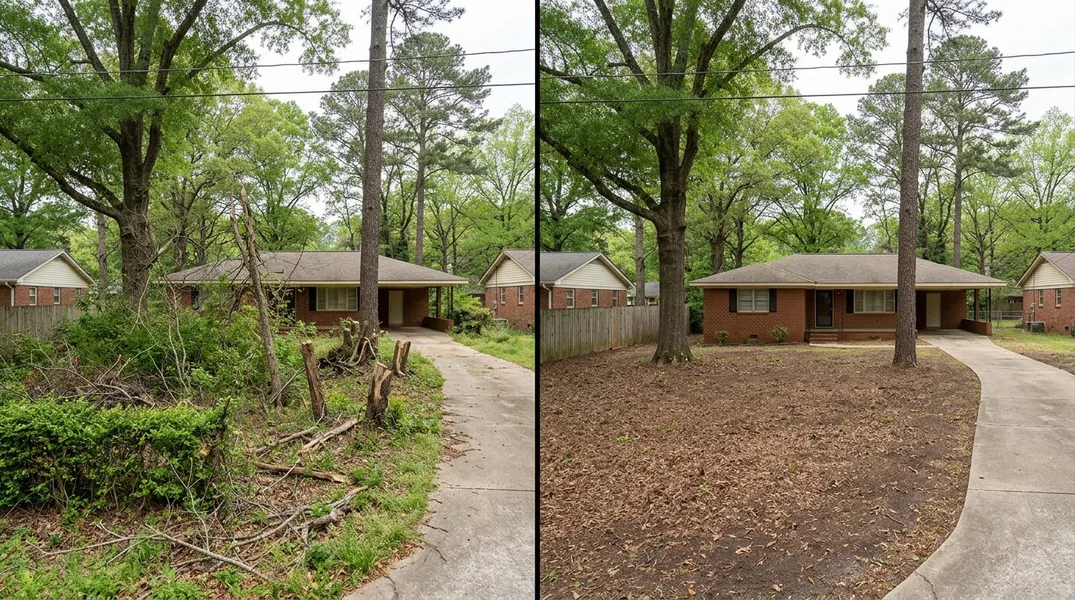
Understanding Water Oak and Laurel Oak Trees in Montgomery
Water oaks and laurel oaks are common sights throughout Montgomery, valued for their shade and natural beauty. However, these oak species have earned a reputation among arborists and homeowners alike for their structural weakness and susceptibility to disease. Unlike the sturdy white oaks or red oaks that can live for centuries, water oaks and laurel oaks tend to have weaker branch attachments, making them prone to failure during storms and high winds.
The problem begins with their growth patterns. Both species grow rapidly and develop dense canopies, which can create an imbalance between their root systems and above-ground biomass. This imbalance makes them top-heavy and unstable, particularly as they age. In the humid climate of Montgomery, where seasonal storms are common, these trees face constant environmental stress that accelerates their decline.
Common Water Oak Tree Problems
Water oak trees are notorious for developing multiple structural issues that homeowners should recognize early. One of the most common problems is branch dieback, where entire limbs suddenly lose their leaves and die while still attached to the tree. This occurs because water oaks have a shallow, fibrous root system that struggles to deliver water and nutrients throughout the canopy, especially during dry periods. As the tree ages, it becomes increasingly difficult for the root system to support the growing crown, leading to selective branch failure.
Another significant issue is the tree's susceptibility to wood decay and hollow cavities. Water oaks develop heartwood decay at an alarming rate compared to other oak species. Once decay begins, it spreads quickly through the trunk, weakening the tree's structural integrity. A hollow oak tree may appear healthy on the surface, but the internal decay can compromise its ability to withstand wind loads. Additionally, water oaks are prone to storm damage because their branches have weak crotch angles, meaning the angle where branches meet the trunk is acute rather than wide, creating a mechanical weakness that fails under stress.
Laurel Oak Problems and Structural Concerns
Laurel oaks present similar challenges to water oaks, though the specific failure patterns differ slightly. Laurel oaks are particularly susceptible to a condition called oak wilt, a fungal disease that spreads through the tree's vascular system. While oak wilt affects many oak species, laurel oaks seem especially vulnerable, and the disease can kill a tree within one to two years of infection. In addition to disease susceptibility, laurel oaks develop multiple codominant stems, which means the tree grows with two or more main trunks of equal size. This growth pattern creates competing leaders that split apart under their own weight or during storms.
The wood quality of laurel oaks is also a concern. Their wood is brittle and prone to splitting, which means branches don't bend gracefully in wind but rather snap suddenly. This unpredictability makes laurel oaks hazardous in residential settings, especially if they overhang homes, driveways, or power lines. Many homeowners in Montgomery have experienced the sudden failure of seemingly healthy laurel oak branches, sometimes with little warning. Professional Tree Trimming & Pruning can help manage these trees, but removal is often the safest long-term solution.
Signs Your Oak Tree Needs Removal
Recognizing when an oak tree has declined beyond saving is crucial for protecting your property and family. Several warning signs indicate that Tree Removal may be necessary. If you notice large sections of dead branches throughout the canopy, the tree is likely experiencing significant stress. Similarly, if the tree is leaning noticeably or has exposed roots at the base, structural failure becomes more probable. A hollow oak tree with visible cavities or soft spots in the trunk is a red flag that internal decay has compromised the tree's integrity.
Other concerning signs include fungal growth or mushrooms emerging from the trunk, which indicate active decay. If the tree has lost more than 50 percent of its canopy, or if major branches are hanging loosely, professional assessment is essential. During storm season, if the tree sheds numerous branches even in moderate winds, it's demonstrating instability. Finally, if you notice the bark is peeling away in large sections or there are deep cracks in the trunk, these are signs of severe stress. When you observe any combination of these symptoms, contacting Montgomery Tree Service for a free estimate is the smart first step.
Tree Removal Near Me: When to Call a Professional
Attempting to remove a declining or hazardous oak tree yourself is dangerous and inadvisable. Professional arborists have the equipment, training, and insurance to safely remove large trees without damaging nearby structures or utilities. When a water oak or laurel oak is showing signs of failure, the risk of sudden branch drop or complete toppling increases significantly, especially if storms are in the forecast. Emergency Tree Service becomes necessary when a tree has already failed or poses an immediate hazard.
Montgomery Tree Service specializes in evaluating oak trees and determining whether removal or preservation is the best course of action. Our experienced arborists can assess the extent of decay, evaluate structural stability, and recommend the safest removal strategy. If removal is needed, we handle everything from cutting and hauling to Stump Grinding, leaving your yard clean and ready for replanting. For a professional evaluation of any oak tree on your property, call us today at (334) 781-7688 to discuss your concerns.
Prevention and Alternatives to Removal
Not every declining oak tree must be removed immediately. In some cases, strategic pruning and ongoing maintenance can extend the tree's useful life and reduce hazard risk. Removing dead or diseased branches, thinning the canopy to reduce wind resistance, and correcting structural defects through proper pruning can help stabilize a weakening tree. However, this approach works best when the tree is still in relatively good health. Once decay has advanced significantly or the tree has lost structural integrity, removal becomes the safer and more economical choice.
If you're considering planting new trees to replace water oaks or laurel oaks, consider species that are better suited to the Montgomery climate and have stronger structural characteristics. Species like white oak, willow oak, and live oak tend to be more durable and longer-lived. These alternatives provide similar shade and aesthetic benefits without the chronic problems associated with water and laurel oaks. Whether you decide to preserve an existing tree or remove it in favor of healthier alternatives, the arborists at Montgomery Tree Service can guide you through the decision-making process and help you create a safer, more beautiful landscape.
Looking for a professional tree service contractor in Montgomery? Montgomery Tree Service responds fast for all your tree service needs.
Get a Free QuoteOur services: Tree Removal · Tree Trimming & Pruning · Stump Grinding